
9 Italian Coastal Towns Cheaper Than the Amalfi Coast (and Just as Beautiful)

Cliff-backed beaches, pastel harbors, and seafood dinners that cost a fraction of Positano prices, scattered from Liguria to Sicily.
9 Italian Coastal Towns Cheaper Than the Amalfi Coast (and Just as Beautiful)
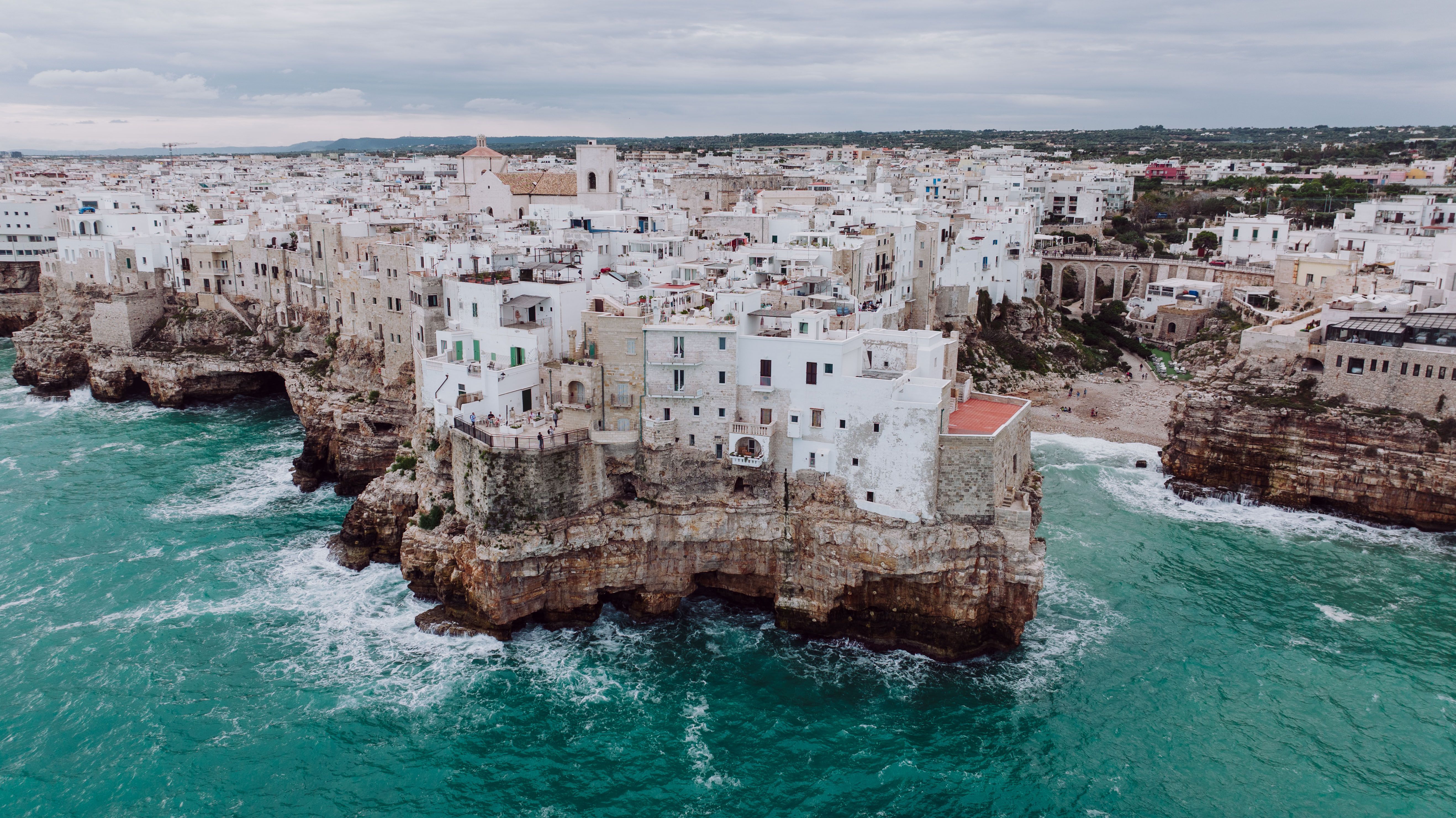
Explore the stunning cliffside architecture of Polignano a Mare in southern Italy overlooking the turquoise sea. · K

The Amalfi Coast is glorious, and everyone knows it, which is exactly the problem. Hotel rates spike past 400 euros a night in summer, Positano's beach clubs charge by the sunbed, and the coast road clogs to a standstill from June to September. The good news: Italy has more than 7,500 kilometers of coastline, and plenty of it rivals Amalfi's drama for a fraction of the cost.

From the Tyrrhenian cliffs of Basilicata to the chalk-white headlands of Puglia and the fishing harbors of Liguria and Sicily, these towns give you the turquoise water, the cliff-hugging old quarters, and the long seafood lunches without the Amalfi markup. Several sit on regional train lines or short drives from major airports, so they are realistic for a few days or a week.

We have ranked them best first, weighing scenery, beaches, food, atmosphere, and value. Each entry includes how to get there and who it suits, so you can build a coastline trip that feels indulgent without emptying your wallet.

1
Maratea
MarateaBasilicata, on the Tyrrhenian coast between Campania and Calabria Google
Often called the Pearl of the Tyrrhenian, Maratea packs 30 kilometers of cliffs, coves, and a tangle of medieval lanes into Basilicata's tiny slice of coast, yet sees a fraction of Amalfi's visitors. A giant marble statue of Christ the Redeemer crowns Monte San Biagio above town, with views that stretch to Calabria on a clear day. Down at the Porto, fishing boats bob beside seafood trattorias where a plate of fresh anchovies or lagane pasta costs a fraction of what you would pay on the Sorrentine peninsula. The beaches here are pebbly coves reached by winding roads, intimate rather than crowded.
  • The Christ the Redeemer statue and panorama from Monte San Biagio
  • Aperitivo and seafood at the Porto di Maratea
  • Swimming at Cala Jannita (the black-sand beach) and Marina di Maratea
Best for: travelers who want Amalfi-level drama with hardly any crowds
Getting there: About 3 hours by car or train south of Naples; the Maratea station sits on the Naples-Reggio Calabria line.
2
Cefalù
CefalùNorthern Sicily, about 1 hour east of Palermo Google
Cefalù stacks honey-colored houses beneath a massive rock headland, La Rocca, with a Norman cathedral whose golden mosaics rival anything in Sicily. The old town is a maze of medieval lanes that open suddenly onto a long sandy beach, a rarity on this rocky coast, and the water shelves gently enough for families. Climb La Rocca at sunset for the classic view over terracotta rooftops to the sea, then eat pasta with sardines or fresh swordwood involtini at a harbor-side table for half the price of a Positano dinner. It is touristy in August but still far gentler on the budget than the Amalfi resorts.
  • The Norman Duomo and its Byzantine Christ Pantocrator mosaic
  • Climbing La Rocca for sunset views
  • The medieval Lavatoio washhouse and the long town beach
Best for: first-timers who want a beach, history, and Sicilian food in one walkable town
Getting there: Roughly 1 hour by direct regional train from Palermo, which has a major international airport.
3
Tropea
TropeaCalabria, on the Coast of the Gods (Costa degli Dei) Google
Tropea perches on a sandstone bluff above some of the most luminous turquoise water in Italy, with the islet church of Santa Maria dell'Isola rising from the sand below like a film set. The historic center is full of palazzi, gelato shops, and stalls selling the town's famous sweet red onions, which turn up in everything from jam to gelato. White-sand beaches sit directly beneath the cliffs, and on clear days you can see the cone of Stromboli volcano offshore. Calabria remains one of Italy's best-value regions, so seafood dinners, granita, and rooms all cost noticeably less than the Tyrrhenian resorts further north.
  • The clifftop view over Santa Maria dell'Isola
  • Tropea red onion specialties, including onion gelato
  • Swimming at the white-sand beaches below the old town
Best for: beach lovers chasing Caribbean-blue water on a budget
Getting there: Around 1 hour by train or car from Lamezia Terme airport; Tropea has its own station on the coastal line.
4
Polignano a Mare
Polignano a MarePuglia, about 40 minutes south of Bari Google
Polignano a Mare is the Puglian postcard: a white old town balanced on limestone cliffs that plunge into clear Adriatic water, with the famous Lama Monachile cove tucked into a ravine between the rocks. Wander the lanes past balconies of bougainvillea and poetry painted on the steps, then descend to the pebble beach for a swim framed by sheer cliffs. The town was the birthplace of singer Domenico Modugno (of "Volare" fame), whose statue waves from the seafront. Eat raw seafood and orecchiette in town, or splurge a little on a meal inside a sea cave at Grotta Palazzese, still cheaper than Amalfi's marquee restaurants.
  • The cliff view over Lama Monachile beach
  • Exploring the whitewashed centro storico and Modugno statue
  • A drink or meal in the Grotta Palazzese sea cave
Best for: couples and photographers who want dramatic cliffs close to an airport
Getting there: About 35 to 45 minutes by regional train or car from Bari, which has an international airport.
5
Sperlonga
SperlongaLazio, roughly halfway between Rome and Naples Google
Sperlonga is the easiest swap for a Roman beach weekend: a cluster of whitewashed houses on a promontory between two long sandy beaches, with Greek-island looks that feel out of place in central Italy. The car-free old town is a tumble of arches, stairways, and tiny piazzas that open onto sea views, and it stays surprisingly low-key given how close Rome is. Just south of town, the ruins of Emperor Tiberius's seaside villa and grotto, now a small museum, hold dramatic Hellenistic sculptures. Lidos here charge a fraction of Amalfi's beach-club rates, and you can swim off free public stretches too.
  • The whitewashed car-free old town and its sea-view alleys
  • The Villa of Tiberius ruins and Archaeological Museum
  • Long sandy beaches on either side of the promontory
Best for: a Rome-based beach escape without a long journey
Getting there: About 1.5 hours from Rome; take a train to Fondi-Sperlonga station, then a short connecting bus to the coast.
6
Santa Maria di Castellabate
Santa Maria di CastellabateCilento coast, Campania, about 1 hour south of Salerno Google
Just down the coast from Amalfi, the Cilento National Park's shore delivers similar Tyrrhenian beauty for far less, and Santa Maria di Castellabate is its charming hub. The waterfront village has a working fishing harbor, clear protected water (this is a marine reserve), and the hilltop hamlet of Castellabate above with sweeping coastal views. This is mozzarella country and home to the original Mediterranean diet, so meals lean on buffalo cheese, fresh fish, and Cilento olive oil, all priced for locals rather than yacht crowds. The whole area still feels like the Italy of a generation ago.
  • The medieval hilltop village of Castellabate and its castle viewpoint
  • Swimming in the Santa Maria marine reserve waters
  • Buffalo mozzarella and seafood in the harbor trattorias
Best for: travelers who love the Amalfi look but want authenticity and low prices
Getting there: About 1 to 1.5 hours by car from Salerno; seasonal ferries and trains to Agropoli, then a short bus or taxi, also work.
7
Vieste
ViesteGargano peninsula, northern Puglia Google
On the spur of Italy's boot, Vieste crowns a rocky headland with a labyrinthine old town and the Pizzomunno, a towering white sea stack standing sentinel over the main beach. The Gargano coast is a string of sea caves, hidden coves, and pine-backed cliffs best explored by boat, and the surrounding national park adds forests and dramatic drives. Because northern Puglia gets fewer international tourists than the trulli towns inland, prices for rooms and seafood stay modest. Time it for the Gargano's famous sunsets, when the limestone glows gold above the Adriatic.
  • The Pizzomunno sea stack and old-town beach
  • Boat tours of the Gargano sea caves and grottoes
  • Sunset over the whitewashed centro storico
Best for: beach-and-nature seekers who want long sandy shores and sea caves
Getting there: About 2 to 2.5 hours by car or bus from Bari or Foggia; a hire car is the easiest way to reach the Gargano.
8
Numana and Sirolo
Numana and SiroloConero Riviera, Marche, just south of Ancona Google
The Conero Riviera is central Italy's best-kept beach secret, where a green limestone headland drops into the clearest water on the Adriatic. Sirolo sits on the cliff edge with a balcony piazza overlooking the sea, while neighboring Numana has a fishing harbor and easier beach access. The star is Spiaggia delle Due Sorelle, a pebble cove beneath the cliffs reachable mainly by boat, with two white rock stacks offshore. Marche is one of Italy's most underrated and affordable regions, so you get excellent seafood, local Verdicchio wine, and uncrowded beaches at small-town prices.
  • The Due Sorelle beach and its twin rock stacks
  • Sirolo's clifftop piazza and sunset views
  • Fresh Adriatic seafood with a glass of Conero or Verdicchio wine
Best for: travelers who want clear water and quiet beaches off the tourist trail
Getting there: About 30 to 40 minutes by car or bus from Ancona, which has an airport and a mainline train station.
9
Camogli
CamogliItalian Riviera, Liguria, about 30 minutes from Genoa Google
If the Cinque Terre and Portofino are the pricey, crowded options on the Ligurian coast, Camogli is the soulful, affordable alternative right next door. Tall pastel houses line a curving pebble beach and a small fishing harbor, painted in the trompe-l'oeil style Liguria is known for, and the town stays genuinely lived-in rather than touristy. From here you can hike or take a boat to the abbey of San Fruttuoso, tucked in its own roadless cove. Try the local focaccia and fritto misto, and visit in May for the Sagra del Pesce, when fish is fried in a giant pan on the waterfront.
  • The pastel harborfront and pebble beach
  • Boat or coastal hike to San Fruttuoso abbey
  • Ligurian focaccia, fresh fried fish, and the Sagra del Pesce festival
Best for: those who want Riviera glamour and Cinque Terre scenery without the prices
Getting there: About 30 minutes by frequent regional train from Genoa on the line toward La Spezia.

Good to Know

When to go Late May to mid-June and September deliver warm sea, open beach clubs, and far lower prices than peak July and August. Many southern towns stay swimmable into early October.
Getting around Coastal regional trains serve Cefalu, Tropea, Polignano, Camogli, and Vieste-adjacent hubs cheaply, but a hire car unlocks the Cilento, Gargano, and Conero coves that buses reach poorly.
Budget beaches Look for the free public stretches (spiaggia libera) beside the paid lidos; bring your own umbrella and you can spend a beach day for the cost of a gelato.
Book ahead in August Italians take their own holidays in August, so southern coastal rooms and ferries fill fast and prices climb. Reserve well in advance or aim for the shoulder months.

You do not need an Amalfi budget to wake up over turquoise water in Italy. Pick one coast and settle in, or string several of these towns together by train and car for a slower, cheaper, and often more memorable trip. Wherever you land, you will get the cliffs, the seafood, and the sunsets without the Positano price tag.

Ready to book your trip?

Search Hotels
Search Homes

Traveling somewhere else?

Generate a custom itinerary