
8 Quieter Alternatives to Venice: Italian Canal Towns Without the Crowds

Venice's romance lives on across the Veneto and beyond, in fishing ports, lagoon islands, and Renaissance river cities where you can actually hear the water lap.
8 Quieter Alternatives to Venice: Italian Canal Towns Without the Crowds
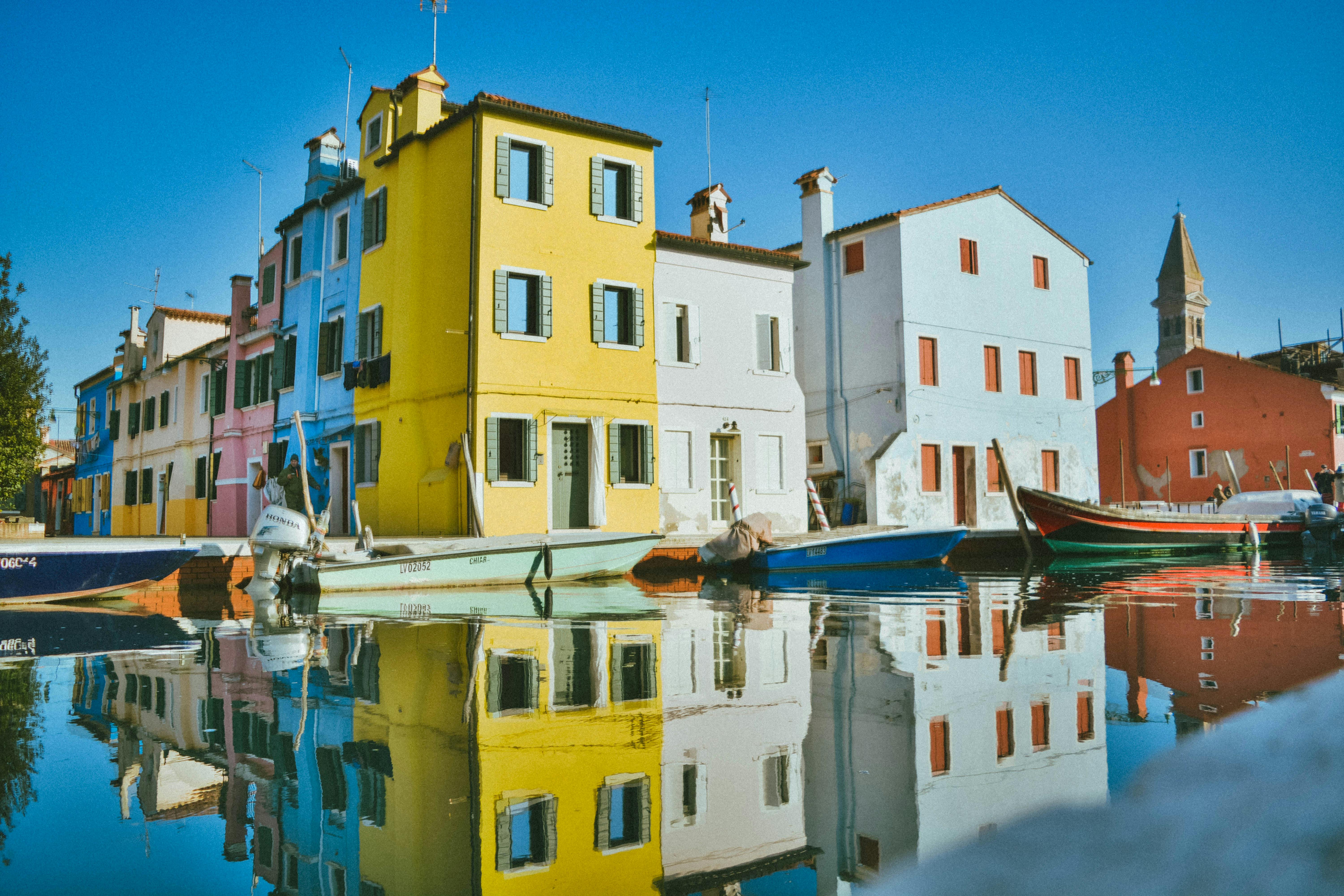
Charming colorful houses reflected in the canal in Burano, Venice, Italy. · Camila Tommasone

Venice is one of a kind, but its narrow calli now groan under day-tripper traffic, and the magic can drain away when you are shuffling shoulder to shoulder across the Rialto. The good news: the Veneto and its neighbors are laced with canals, arched bridges, lagoon islands, and Renaissance river cities that offer the same watery romance at a slower pace and a lower price.

These eight places are all real, easy to reach by train or car, and genuinely worth a day or an overnight. Some sit inside the Venetian lagoon itself; others trade canals for porticoes, frescoes, and Prosecco hills. All of them let you breathe.

Order them by how close they come to that Venice feeling, or just pick the one that fits your route. Most pair beautifully with a night in a smaller base where dinner costs half what it does on the Grand Canal.

1
Chioggia
ChioggiaSouthern edge of the Venetian Lagoon, about 1 hour from Venice Google
Locals call Chioggia 'Little Venice,' and the comparison holds: a long central canal (the Canal Vena) crossed by stone bridges, narrow side lanes, and a working fishing fleet that supplies half the region's seafood. Unlike Venice, it is unmistakably a real town, with kids on bikes, a morning fish market that is one of the best in Italy, and prices that won't make you wince. Walk Corso del Popolo to the Romanesque-Gothic cathedral, then eat moleche (soft-shell crab) or a plate of grilled cuttlefish at a canal-side trattoria. Nearby Sottomarina adds a long sandy beach if you want to combine canals with a swim.
  • The morning fish market along Canal Vena
  • Grilled seafood and moleche at a local osteria
  • Corso del Popolo and the cathedral bell tower
Best for: seafood lovers who want a lived-in Venice feel
Getting there: About 1 hour from Venice by bus (line via Sottomarina) or a short drive; trains run to nearby Rovigo with a bus connection
2
Burano
BuranoNorthern Venetian Lagoon, 45 minutes by vaporetto from Venice Google
4.8 · 12,113 reviews
Burano sits inside the same lagoon as Venice but feels like a different, gentler world: a fishing island where every house is painted a saturated shade of pink, blue, green, or ochre, reflected in still canals. It is famous for handmade lace, kept alive by a handful of artisans and documented in the small Museo del Merletto. Come for the colors, stay for the quiet once the day-trippers leave, and try risotto de gò, a local risotto made with lagoon goby fish. Pair it with neighboring Murano for glassblowing demonstrations and you have a full, photogenic day on the water.
  • Rainbow-painted fishermen's houses
  • The leaning campanile of San Martino
  • Handmade lace and the Museo del Merletto
  • Risotto de go at a canal-side restaurant
Best for: photographers and anyone wanting lagoon calm
Getting there: Vaporetto line 12 from Venice's Fondamente Nove, about 45 minutes
3
Treviso
TrevisoVeneto, 30 minutes north of Venice Google
Treviso is the easiest Venice swap of all: a walled town threaded with branches of the Sile and Botteniga rivers, complete with willow-draped canals, water wheels, and frescoed palazzo facades. The arcaded streets are made for slow wandering, the Pescheria fish market sits on its own little island, and this is the birthplace of both radicchio tardivo and tiramisu. Sit under the porticoes of Piazza dei Signori with a spritz, then eat at an old osteria where Prosecco comes by the glass for a couple of euros. It is also the gateway to the Prosecco hills around Valdobbiadene.
  • Canalside Pescheria fish market island
  • Frescoed facades around Piazza dei Signori
  • Tiramisu where it was invented
  • Cheap, excellent local Prosecco
Best for: an easy first stop and aperitivo culture
Getting there: Regional trains from Venice take about 30 minutes
4
Comacchio
ComacchioEmilia-Romagna, in the Po Delta about 1.5 hours south of Venice Google
Set in the marshy Po Delta, Comacchio is another 'Little Venice,' built across thirteen islands joined by canals and grand brick bridges, the most famous being the triple-arched Trepponti. It is far less visited than anything in the Veneto, so you often have the canals to yourself, with herons stalking the reedbeds just outside town. The local specialty is eel, traditionally caught and smoked here; visit the old Manifattura dei Marinati to see how. Rent a bike to reach the wide beaches of the Lidi di Comacchio or take a boat into the lagoon to spot flamingos.
  • The monumental Trepponti bridge
  • Smoked eel at the Manifattura dei Marinati
  • Flamingo-spotting boat trips in the Po Delta
  • Cycling to the nearby Adriatic beaches
Best for: nature and crowd-free canal photos
Getting there: Best by car (about 1.5 hours from Venice); by train to Ferrara then a bus to Comacchio
5
Mantua
MantuaLombardy, about 2.5 hours west of Venice Google
Mantua (Mantova) trades canals for three artificial lakes that wrap the old town in water, giving it a dreamlike, mist-on-the-lake atmosphere at dawn. This was the seat of the Gonzaga dynasty, and their legacy is staggering: the vast Palazzo Ducale with Mantegna's frescoed Camera degli Sposi, and the pleasure villa of Palazzo Te with its wild Hall of the Giants. The town is compact, walkable, and refreshingly untouristy, with arcaded squares made for lingering. Order tortelli di zucca (pumpkin tortelli with amaretti) and a glass of Lambrusco to taste the local Renaissance richness.
  • Mantegna's Camera degli Sposi in Palazzo Ducale
  • Giulio Romano's Palazzo Te
  • Sunrise over the three lakes
  • Tortelli di zucca and Lambrusco
Best for: art and Renaissance history fans
Getting there: Trains from Venice via Verona, around 2.5 hours; easy by car
6
Padua
PaduaVeneto, 25 minutes from Venice Google
Padua (Padova) gives you Venetian elegance with a buzzing university-town energy and almost no foreign-tourist crush. The headline is Giotto's revolutionary fresco cycle in the Scrovegni Chapel, one of the most important artworks in Europe, but the city also has porticoed streets, canals, and Italy's oldest botanical garden. The enormous Prato della Valle is one of the continent's largest squares, ringed by a moat and statues, and on most days it is busy with locals, not tour groups. Cheap student bars mean a spritz and cicchetti cost a fraction of Venice prices.
  • Giotto's frescoes in the Scrovegni Chapel
  • Prato della Valle, ringed by its canal
  • The historic Orto Botanico
  • Aperitivo in Piazza delle Erbe
Best for: art lovers wanting a city base
Getting there: Frequent trains from Venice, just 25 to 50 minutes (book Scrovegni Chapel ahead)
7
Bassano del Grappa
Bassano del GrappaVeneto foothills, about 1 hour north of Venice Google
Where the Brenta river spills out of the mountains, Bassano del Grappa centers on its covered wooden Ponte Vecchio, designed by Palladio and rebuilt many times, with views of the Alpine foothills beyond. It is a handsome, low-key town known for ceramics, white asparagus, and of course grappa: stop at the historic Nardini distillery right on the bridge for a tasting. The old center has frescoed houses, a couple of fine little museums, and a relaxed pace that makes a good overnight. Use it as a launch point into the Prosecco hills or up toward the Asiago plateau.
  • Palladio's covered Ponte Vecchio
  • Grappa tasting at Nardini on the bridge
  • Local ceramics and white asparagus in season
  • Views to the Dolomite foothills
Best for: a relaxed overnight near the mountains
Getting there: Direct regional trains from Venice in about 1 hour
8
Grado
GradoFriuli Venezia Giulia, about 2 hours northeast of Venice Google
Grado is a lagoon island town that once supplied bishops to Venice itself, and it still feels like a quieter cousin: a tight historic core (the Castrum) of stone lanes and early-Christian basilicas, fringed by a long south-facing beach. The surrounding lagoon is dotted with casoni, traditional thatched fishermen's huts, some reachable by boat. It is a favorite Austrian and Italian seaside escape, so summer brings beachgoers, but the atmosphere stays calm and the seafood is superb. Pair it with the Roman ruins and golden mosaics of nearby Aquileia for a deep dose of history.
  • The Basilica di Sant'Eufemia and old Castrum
  • Lagoon boat trips to the casoni huts
  • A long sandy Adriatic beach
  • Roman Aquileia and its mosaics nearby
Best for: combining canals, history, and a beach
Getting there: About 2 hours by car from Venice; by train to Cervignano-Aquileia-Grado then a short bus

Good to Know

When to go Late spring (May to June) and September give you warm weather, open seafood season, and the thinnest crowds. Avoid August, when Italians themselves descend on the lagoon and Adriatic towns.
Getting around The Veneto has one of Italy's best regional rail networks, so Treviso, Padua, and Bassano are cheap, frequent day trips. For Comacchio, Mantua, and Grado, a rental car saves a lot of connections.
Book key sights ahead Padua's Scrovegni Chapel requires a timed reservation, and Mantua's Palazzo Ducale frescoed rooms can sell out in peak season. Reserve online a few days in advance.
Base smartly Treviso or Padua make excellent, affordable overnight bases with fast train links, letting you see Venice itself in a day without paying Venice hotel prices.

You don't have to give up canals, lagoon light, or frescoes to escape the Venice crowds, you just have to look a little wider across northern Italy. Pick one of these towns as a base, or string several together by train, and you'll find the same romance with room to enjoy it. Plan a loop through the Veneto and you may end up preferring the quieter version.

Ready to book your trip?

Search Hotels
Search Homes

Traveling somewhere else?

Generate a custom itinerary