
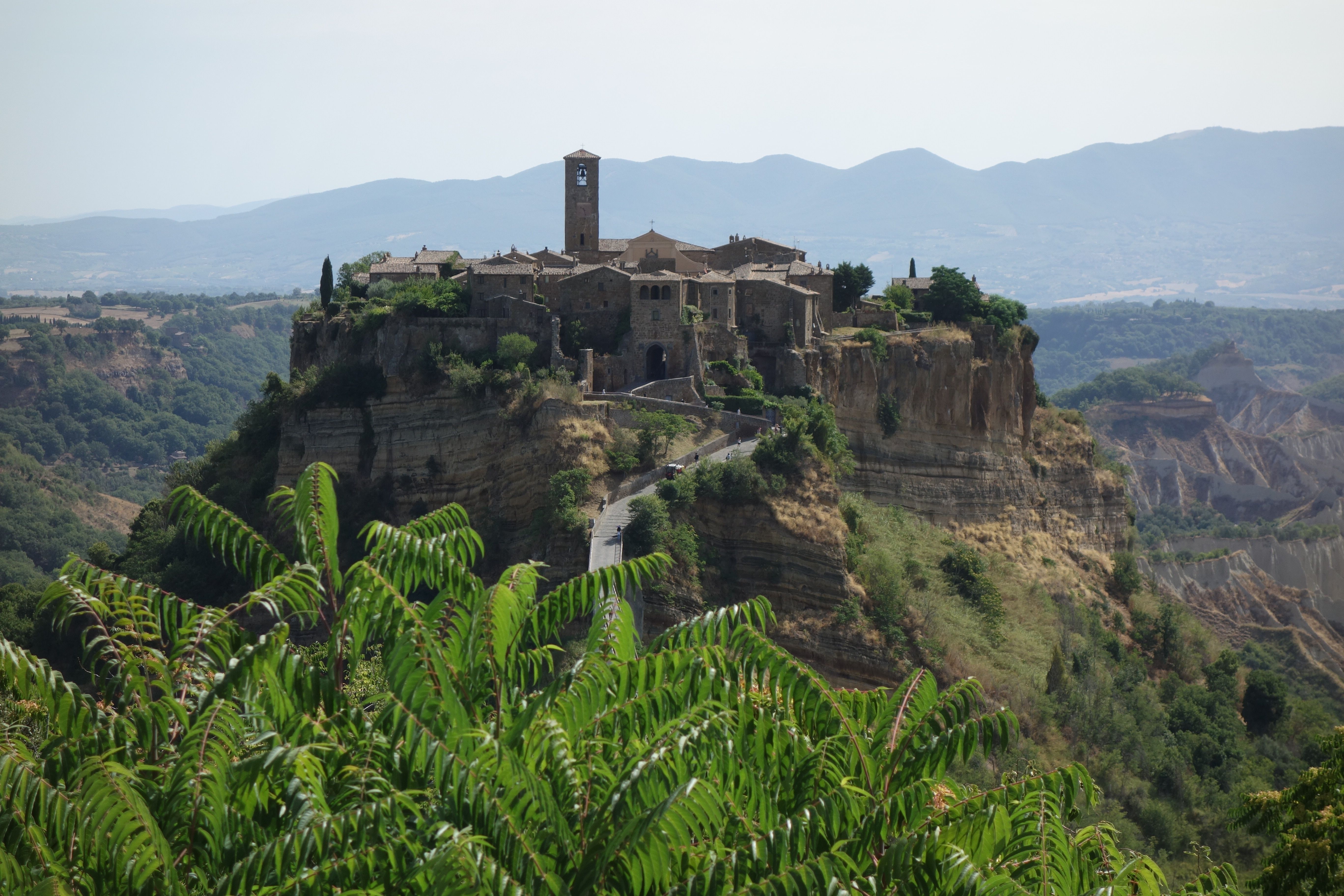
A breathtaking view of Civita di Bagnoregio, Italy, captured from a lush green viewpoint.
List · Rome 7 picks

7 Beautiful Small Towns Near Rome That Are Worth the Journey

Cliff-top villages, papal lake towns, and seaside whitewash, all within easy reach of the Eternal City.

Last updated March 26, 20258 min read

Rome rewards anyone who lingers, but some of central Italy's most memorable places sit just beyond the ring road: tufa towns clinging to cliffs, papal villages above volcanic lakes, and a whitewashed fishing town that looks Greek. Each of these is close enough for a day trip, though several deserve an unhurried overnight.

These seven towns are chosen for beauty and ease of access, with a deliberate mix: some you reach in under an hour by regional train, others need a car or a coach connection. All are real, open, and worth the seat time.

Use this list to match the town to the kind of day you want, whether that's wine and a Gothic cathedral, Renaissance gardens, or grilled fish by the Tyrrhenian Sea. Best-first below, with getting-there notes from central Rome.

Orvieto1
Orvieto Google
About 1 hour 15 minutes north of Rome, in Umbria
Orvieto rises on a flat-topped plug of volcanic tufa, and the approach alone (by funicular from the train station up to the old town) sets the mood. Its Duomo is the star: a striped facade glittering with gold mosaics and, inside, Luca Signorelli's apocalyptic frescoes in the San Brizio Chapel that influenced Michelangelo. Below the streets lies a honeycomb of Etruscan-era caves and wells you can tour, including the dramatic St. Patrick's Well with its double-helix staircase. Pair the sightseeing with a glass of crisp Orvieto Classico white and a plate of umbrichelli pasta.
  • The mosaic facade and Signorelli frescoes in the Duomo
  • Pozzo di San Patrizio (St. Patrick's Well)
  • Orvieto Underground cave tour
  • Local Orvieto Classico white wine
Best for first-timers who want a cathedral, wine, and easy train access
Getting there Direct regional trains from Roma Termini take about 1 hour 15 minutes; from the station take the funicular up to the historic center
Tivoli2
Tivoli Google
About 45 minutes east of Rome, in Lazio
Tivoli has drawn Romans seeking cool air and grand gardens for two millennia, and two UNESCO sites make it an essential day out. Villa d'Este is a Renaissance fantasy of terraced fountains, the Hundred Fountains and the booming Organ Fountain among hundreds of jets fed entirely by gravity. A short bus ride away, Hadrian's Villa sprawls across acres of pools, baths, and the island-retreat Maritime Theater the emperor built as his private escape. The town itself is pleasant for a lunch of porchetta before heading back.
  • The fountains and gardens of Villa d'Este
  • Hadrian's Villa (Villa Adriana)
  • The Organ Fountain water show
  • Tivoli's old streets and porchetta
Best for garden lovers and history buffs
Getting there Regional trains from Roma Termini or Tiburtina take about 1 hour, or the Cotral bus from Ponte Mammolo is around 50 minutes
Civita di Bagnoregio3
Civita di Bagnoregio Google
About 2 hours north of Rome, in Lazio near the Umbria border
Known as the dying town, Civita di Bagnoregio sits atop a crumbling pedestal of tufa, connected to the world only by a long footbridge you cross on foot. The erosion that threatens it is exactly what makes the place so striking, an island of medieval stone floating above a valley of badlands called the calanchi. Inside the gates are a handful of stone lanes, a Romanesque church, viewpoints over the ravines, and a few cafes serving bruschetta and local wine. It is small, so an hour or two is enough, but the silence and the views are unforgettable.
  • The pedestrian footbridge and first view of the town
  • Piazza San Donato and the church
  • Panoramas over the calanchi badlands
  • A glass of wine on a clifftop terrace
Best for photographers and anyone chasing a dramatic setting
Getting there Easiest by car (about 2 hours); by transit, take a train to Orvieto then a Cotral bus to Bagnoregio and walk to the bridge, allowing extra time
Castel Gandolfo4
Castel Gandolfo Google
About 45 minutes southeast of Rome, in the Castelli Romani
Perched above the deep blue crater of Lake Albano, Castel Gandolfo is best known as the summer residence of the popes, whose Apostolic Palace and Barberini Gardens are now open to visitors. The small piazza by Bernini's church is one of the prettiest in the Castelli Romani, with cafe tables and lake views below. Walk or take the path down to the lakeshore for a swim or a rowboat in summer, then come back up for a long lunch. It pairs naturally with nearby wine towns like Frascati if you have a car.
  • The papal Apostolic Palace and Barberini Gardens
  • Views over Lake Albano from the piazza
  • Swimming or boating on the lake
  • Lakeside trattorias and Castelli wine
Best for a relaxed half-day with a lake swim
Getting there Direct regional trains from Roma Termini take about 40 minutes; the station sits below town with a steep walk or shuttle up
Sperlonga5
Sperlonga Google
About 2 hours south of Rome, on the Tyrrhenian coast
Sperlonga is a cascade of whitewashed houses tumbling down a headland between two long sandy beaches, more Cycladic than central Italian. The car-free old town is a maze of stairs, arches, and sea-view terraces made for slow wandering, while the beaches below earn their Blue Flag status with clear, shallow water. Just south of town, the Grotto of Tiberius and its archaeological museum preserve the dramatic seaside dining cave the emperor built into the cliff. Come for a beach day with real character and a seafood lunch.
  • The whitewashed car-free old town
  • Blue Flag beaches on either side of the headland
  • The Grotto of Tiberius and archaeological museum
  • Fresh grilled fish at a beachfront restaurant
Best for beach days and summer escapes
Getting there Train from Roma Termini to Fondi-Sperlonga (about 1 hour) then a local bus to town (20-30 minutes), or roughly 2 hours by car
Calcata6
Calcata Google
About 1 hour north of Rome, in the Treja Valley
Calcata is a tiny medieval village on a volcanic outcrop that was nearly abandoned, then reborn in the 1960s and 70s when artists and bohemians moved into its half-empty houses. Today the cluster of stone lanes is full of quirky galleries, craft studios, incense-scented cafes, and improvised art, all wrapped in a forested gorge that feels worlds away from the capital. It is small and best on a weekend when shops are open, ideally combined with a walk in the surrounding Parco Valle del Treja. Expect an offbeat, slightly surreal afternoon rather than a tick-list of monuments.
  • The artist-run galleries and craft studios
  • The single medieval piazza and its viewpoints
  • Cafes and tea rooms in tucked-away cellars
  • Hiking trails in the Treja Valley park
Best for creative travelers who like the offbeat
Getting there Easiest by car (about 1 hour); by transit, take a Cotral bus from Saxa Rubra toward Calcata, then a short final stretch on foot
Nemi7
Nemi Google
About 1 hour southeast of Rome, in the Castelli Romani
Nemi is a small balcony of a town hanging over its own dark volcanic lake, famous across Italy for the tiny wild strawberries (fragoline di bosco) grown in the crater below. The single main street is lined with cafes selling crostata and fragoline drizzled with cream, best enjoyed at a table overlooking the water. Down by the lakeshore, the Museum of Roman Ships displays artifacts from the colossal pleasure barges Caligula floated here. It is a quiet, sweet-toothed stop that combines easily with Castel Gandolfo or Genzano for a full Castelli day.
  • Wild strawberries and strawberry crostata
  • Views over Lake Nemi from the main street
  • The Museum of Roman Ships
  • A walk down to the lakeshore
Best for a leisurely food-focused outing
Getting there Best by car (about 1 hour); by transit, Cotral buses run from Anagnina metro toward the Castelli Romani with a connection to Nemi

Want these spots worked into your trip?

We'll build a custom Rome itinerary around the places you pick.

Generate itinerary
Good to know

Before you go

Getting aroundTrenitalia regional trains cover Orvieto, Tivoli, Castel Gandolfo, and Fondi-Sperlonga cheaply and don't need advance booking; buy tickets at the station and validate them. For Calcata, Civita di Bagnoregio, and Nemi a rental car saves hours of connections.
When to goSpring (April-June) and September are ideal across the board. Save Sperlonga and the lake towns for warm months, and visit Civita di Bagnoregio and Calcata on weekends when shops and cafes are reliably open.
Tickets to book aheadVilla d'Este and Hadrian's Villa in Tivoli and the papal palace and gardens at Castel Gandolfo can sell out in high season; reserve timed entries online a few days in advance.
Footwear and pacingMost of these towns involve steep stairs, cobbles, or a footbridge (Civita). Wear sturdy shoes and don't try to combine two distant towns in one day unless you're driving.

Each of these towns shows a different side of central Italy, from Umbrian wine and Renaissance fountains to a seaside that feels borrowed from Greece, all close enough to fold into a Rome trip. Pick one for a day or string a couple together with a rental car, and you'll see why Romans have been escaping to these hills and shores for centuries. Plan a day or two beyond the city, and the Eternal City gets even better.

Plan with MagicTrips

Build your own Rome trip

Tell us how many days, your budget, and what you're into. We'll turn it into a custom, day-by-day Rome itinerary.

Ready to book your stay?

Hotels
Homes

Traveling somewhere else?

Generate a custom itinerary